
Mohammed Sculptor Threats: Lars Vilks and Sweden’s Free Expression Debate

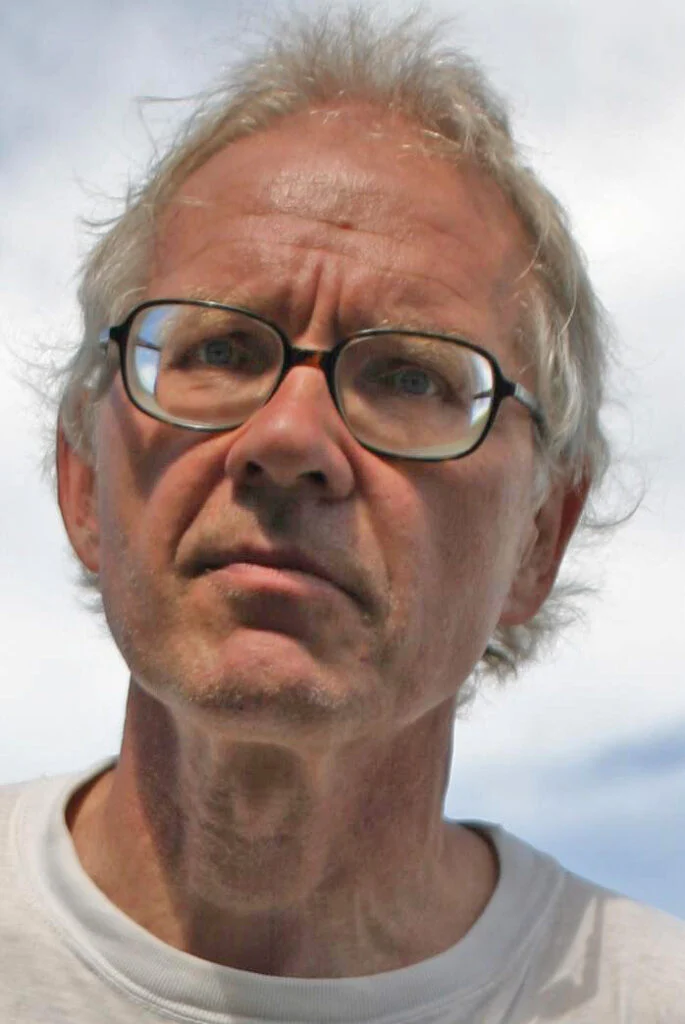
The threats concerned the Swedish artist Lars Vilks, who faced repeated death threats and attacks after publishing a drawing of Muhammad as a roundabout dog in 2007. A later Mohammed sculpture extended the controversy. Sweden's security services protected him until his death in 2021, while courts and police documented the threats.
Who was Lars Vilks and what threats did he receive?
Lars Vilks was a Swedish sculptor and artist whose public work included Nimis, a driftwood structure in Skåne. In August 2007 the regional newspaper Nerikes Allehanda published a drawing that placed the prophet Muhammad as one of several roundabout dogs, a series made for a public art competition. The image moved the case from a local art dispute into a national and international security question.
The term “Mohammed sculpture” can be confusing. The 2007 work that brought the first threats was a drawing, not a sculpture. Vilks later produced a sculpture connected to the same Muhammad theme, so both terms appear in the record. The drawing showed the prophet Muhammad as a roundabout dog, a motif that continued in later pieces.
Within days, Vilks received death threats. The police opened investigations and SÄPO, the Swedish Security Service, arranged protection for him. The threats were recorded by police and became the basis for Swedish legal proceedings.
The escalation: from roundabout dog to Copenhagen
The case moved quickly from publication to physical attacks. A short chronology shows the main moments.
- 2007: the roundabout dog drawing is published in Nerikes Allehanda and death threats begin.
- 2010: Vilks is attacked during a lecture at Uppsala University; police intervene.
- 2015: a gunman opens fire at a free speech meeting in Copenhagen where Vilks is speaking; Vilks is taken to safety.
- 2021: Vilks dies in a road accident; the protection measures end.
These are the events recorded in Swedish police communications. The Swedish Police Authority records the Uppsala and Copenhagen attacks as security incidents at public events. The Uppsala attack occurred inside a university building, showing that threats could turn into physical violence in ordinary public settings. On 6 January 2010, Artforum noted a telephone threat against Vilks after an attack on the Danish cartoonist Kurt Westergaard; the Westergaard case grew out of the earlier Jyllands-Posten cartoon dispute in Denmark. This threat was part of the immediate context before the Uppsala attack. The Copenhagen attack followed the January 2015 attack on the offices of Charlie Hebdo in Paris; both events renewed a European debate about protecting artists and publications that depict Muhammad.
Sweden’s legal and security response
SÄPO, the Swedish Security Service, is the national body responsible for protective security. Brå, the Swedish National Council for Crime Prevention, is a government agency that compiles crime statistics and evaluates criminal justice policy. The state response combined personal protection with criminal investigation. Brå’s statistics include reported threats and attacks, even when a case does not lead to charges, and are the standard public record for offence counts in Sweden. The table below summarises the main events, the state’s measures and what public authorities have documented.
| Event and year | State response | Documented result |
|---|---|---|
| 2007 drawing published in Nerikes Allehanda | SÄPO protection and police threat investigations | Reported death threats recorded; security measures began |
| 2010 Uppsala University attack | Police intervention and continued protection | Public record of the attack; investigations opened |
| 2015 Copenhagen attacks | Swedish-Danish police coordination; continued SÄPO protection | Documented as an attack on a free speech event |
| 2021 Vilks dies in a road accident | Protection requirement ended | Case closed by authorities |
The table does not include every reported threat; Brå’s statistics cover all reported offences, including those that do not lead to charges. The Swedish Police Authority publishes information on protection measures for people at risk. Protective security is reviewed continuously and can be adjusted as the threat picture changes. SÄPO handles protective security for people exposed to threats linked to the exercise of fundamental rights. Criminal cases in Sweden can cover both direct threats and preparatory offences linked to planned attacks.
The free speech debate in Sweden
Sweden’s constitution protects yttrandefrihet, freedom of expression, including the right to publish art and satire. The Vilks case exposed a tension: Swedish authorities did not ban the drawing, but they were required to respond to threats and violence. The legal principle was that criminal penalties apply to direct threats, not to the publication of provocative images.
Swedish courts have generally held that freedom of expression covers controversial art, while threats and incitement are separate crimes. The state can therefore protect an artist without endorsing the artwork. That distinction, rather than a judgement on the image, shaped the Swedish response.
The debate also touched immigration and cultural integration, areas covered in Sweden’s immigrant communities and public debate. Critics said the publication was needlessly offensive; supporters argued that accepting threats would weaken freedom of expression. International media followed Sweden’s cultural controversies closely, as covered in international coverage of Sweden’s cultural controversies. Comparisons with the earlier Jyllands-Posten cartoon dispute in Denmark highlighted how Scandinavian states handle religious offence.
What happened after 2021
Lars Vilks died in a road accident in 2021. Nimis remains a public artwork and a reminder of the case. The debate about freedom of expression and protection for threatened artists continues in Sweden and Europe. His death did not close the broader question of how states should protect artists under threat without restricting publication. The case is part of Stockholm News Desk’s archive project, which revisits Swedish stories and what happened next.
Frequently asked questions
Who is the Swedish artist threatened for a Mohammed sculpture?
Lars Vilks, a Swedish artist known for the drawing of Muhammad as a roundabout dog in 2007.
What happened to Lars Vilks after the threats?
He lived with security protection and survived attacks in Uppsala (2010) and Copenhagen (2015); he died in a road accident in 2021.
Did Sweden prosecute the threats against Lars Vilks?
There were police investigations and documented threat reports; Brå and the Swedish Police Authority recorded the cases.
Why did a Mohammed sculpture cause threats?
The depiction of Muhammad is considered offensive by some Muslims; in Sweden it led to a debate about freedom of expression.
Is the case still relevant today?
Yes, as a precedent for protecting threatened artists and for the limits of freedom of expression in Europe.
Sources
Sources consulted for this follow-up include Brå’s reported crime statistics, Swedish Police Authority communications on protective security, and Artforum’s January 2010 report on the telephone threat to Vilks.
Keep reading