
Baltic Sea Shipwreck Found: The 2011 Wreck That Wasn’t

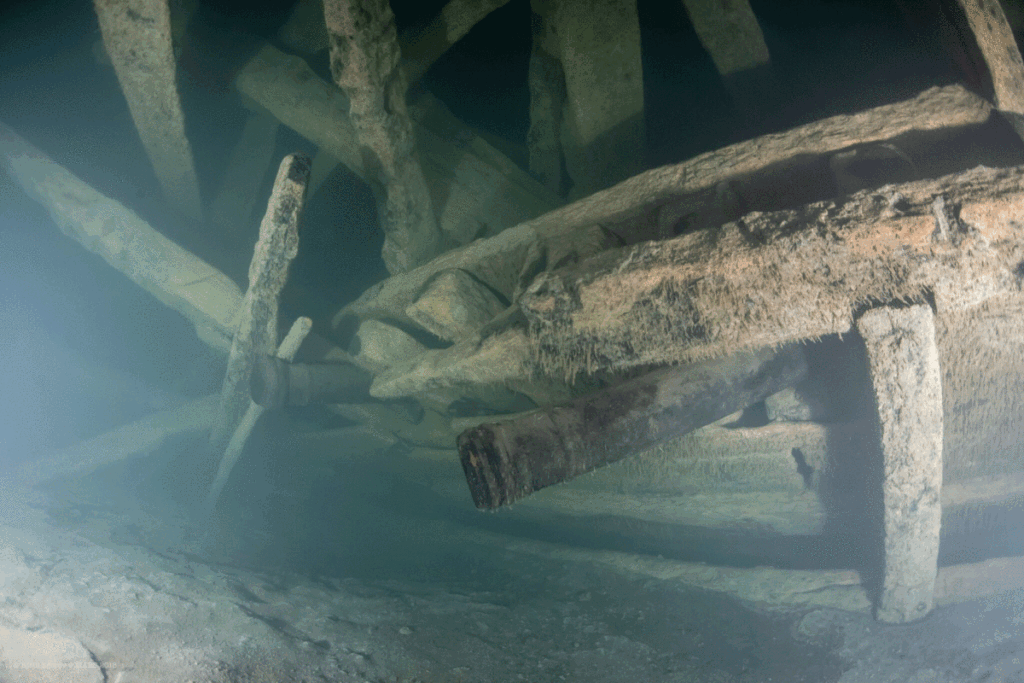
Baltic Sea Shipwreck Found: The 2011 Wreck That Wasn’t
In 2011, Swedish divers reported a 60-metre circular formation 90 metres below the Gulf of Bothnia and called it a sensational Baltic Sea shipwreck. Later surveys found no timber or hull: the anomaly is a natural rock formation formed by glacial processes, not a shipwreck.
The June 2011 report came from Ocean X Team, a Swedish diving group led by Peter Lindberg and Dennis Åsberg. Stockholm News carried the story as “Sensational wreck found in the Baltic Sea”, and hvg.hu later cited the note. For anyone planning travel to the Baltic archipelago, the difference between a natural feature and a wreck matters more than the old headline suggests.
What happened in 2011
In June 2011, Ocean X Team reported a circular feature in the Gulf of Bothnia, the northern arm of the Baltic Sea between Sweden and Finland. The team used side-scan sonar and a remotely operated vehicle (ROV) to inspect the bottom. The sonar showed a shape about 60 metres across at a depth of 90 metres.
At that depth, the site was far below casual diving range and required dedicated equipment. Divers Peter Lindberg and Dennis Åsberg described the target as a sensational find and suggested it might be a shipwreck. Stockholm News carried the report under the headline “Sensational wreck found in the Baltic Sea”.
The story spread quickly, helped by sonar images that looked enough like a disc to invite speculation. No timber, hull or artefacts were recovered at that point, so the find remained a sonar reading rather than an identified wreck. Swedish authorities did not classify it as a shipwreck. The Gulf of Bothnia shipwreck claim from 2011 was therefore not confirmed.
The location was not where known wrecks had been charted, and the shape was too regular to match a typical wooden vessel. Ocean X Team’s public statements left open the possibility of a geological feature, but the stronger word “wreck” travelled further. The team’s wording drew attention because it combined the promise of a wreck with the mystery of an unexplained shape.
Hungarian outlet hvg.hu picked up the story, which kept the Stockholm News note in circulation. Some readers compared the sonar image to natural seabed forms, but no hull fragment supported the shipwreck reading. Follow-up work added no timber or wreck material. By the end of 2011 the story had split into a cautious archaeological question and a widely shared mystery. Several outlets repeated the discovery, but none confirmed a wreck.
What the 2011–2012 investigations found
In 2012, further surveys used side-scan sonar and a remotely operated vehicle (ROV) to examine the Gulf of Bothnia feature at close range. The campaigns found no timber, no hull planks, no nails and no artefacts. ROV footage showed a hard, rocky surface with no exposed frames, planking or fixtures.
The 2012 work was visual inspection, not excavation: a natural rock feature would not justify removing material from the seabed. SVT Nyheter reported in 2012 that the explanation pointed to natural geological processes, not a sunken vessel.
Geologists who reviewed the sonar data described the formation as a glacial deposit: a rock ridge or moraine left by the last ice age. The Swedish National Maritime and Transport Museums (Vrak), part of Stockholm’s history and museum scene, apply a clear test for wreck classification. A feature needs timber, hull remains or artefacts to be recorded as a maritime archaeological site.
The 2011 anomaly failed that test, so it was not entered into the Swedish wreck register. Vrak’s public wreck database lists sites with physical remains, so the anomaly stayed outside it. No expedition produced a plank, a nail or a ceramic fragment from the site.
Side-scan sonar returns from bare rock can mimic hull shapes, and the 2012 ROV survey was the decisive step. The circular shape that had looked so striking in sonar images was consistent with a hard rock formation uneven enough to scatter sound in misleading ways. Ocean X Team did not present a ship identification after the follow-up work.
By the end of 2012, the consensus in Swedish reporting matched the geological explanation: the sensational Baltic Sea shipwreck was not a wreck. The episode left the term “Baltic Sea anomaly” attached to a natural feature, and the name stuck even after the evidence settled. That mismatch between headline and finding is why the story still gets asked about today.
Baltic Sea discoveries: a dated comparison
The 2011 anomaly is easier to judge when set beside confirmed Baltic Sea finds. The table below lists five dated discoveries, from the Vasa salvage to the Kalmar Strait find reported in 2026.
| Year | Find | Location | Status |
|---|---|---|---|
| 1961 | Vasa, 17th-century warship raised | Stockholm, Sweden | Museum ship |
| 2011 | Baltic Sea anomaly, 60 m circular formation | Gulf of Bothnia, Sweden | Natural rock, not a wreck |
| 2012 | SS Kyros cargo wreck located | Baltic Sea | Cargo documented by Finnish team |
| 2020 | Okänt Skepp project discoveries | Swedish waters | Ongoing maritime survey |
| 2026 | Wooden wreck found by HMS Belos | Kalmar Strait, Sweden | Reported 2026; under investigation |
For readers using a guide to Sweden from Stockholm, the Vasa remains the best-known wreck story. The table shows how many Baltic Sea discoveries are real wrecks, and why the 2011 case stands out as an anomaly in name only. The Okänt Skepp project, launched in 2020, uses crowdsourced historical charts to identify new wreck candidates in Swedish waters.
Why the 2011 report matters today
A Baltic Sea shipwreck found in a sonar image felt more exciting than a rock, so the 2011 headline outlived the correction. The case shows how a single phrase can hold attention for years after the evidence moves on. The Stockholm News Archive revisits stories like this because they still circulate.
The episode sits within the wider story of how Stockholm culture treats maritime finds: dramatic first reports tend to outrun the slower work of classification. The same pattern appears in maritime reporting today: a sonar contact is announced as a possible wreck before an ROV confirms it. In 2011 the correction took less than a year, but the earlier wording continued to circulate.
Today, the 2011 anomaly is better understood as a lesson in checking first reports against later surveys. It also explains why the “Baltic Sea anomaly real” question still appears in search results: people remember the word “wreck”, not the later geological finding.
FAQ
Is the Baltic Sea anomaly real?
Yes, the formation is real, but it is natural rock, not a shipwreck. Surveys with side-scan sonar and divers found no timber, hull or artefacts; the feature sits about 60 metres wide at a depth of 90 metres in the Gulf of Bothnia.
Was the 2011 Baltic Sea shipwreck ever identified?
No. The 2011 find produced no wood, hull or artefacts, so it was never identified as a shipwreck.
How many shipwrecks are in the Baltic Sea?
There is no single count. Swedish waters alone hold thousands of wrecks, and the Baltic’s low salinity and low oxygen preserve wooden hulls unusually well.
What was the oldest shipwreck ever found?
The Dokos wreck, off Greece, dated to about 2200 BC, is often cited as the oldest recovered shipwreck. Baltic wrecks are younger but often much better preserved.
Sources
- Ocean X Team, June 2011 report, cited by hvg.hu
- SVT Nyheter, 2012 reporting on the Baltic Sea anomaly
- Swedish National Maritime and Transport Museums (Vrak)
Keep reading